Collections
AI Collections Calls Explained: How Automation Works For NBFCs
How AI collections calls work for NBFCs: account prioritisation, live promise-to-pay capture, CRM write-back, RBI and TRAI compliance controls, and where human collectors still outperform the machine.
AI collections calls use voice AI agents to contact borrowers, capture promise-to-pay commitments, and process payments without a human agent on the line. For NBFCs managing large EMI portfolios, the appeal is operational: more accounts contacted per day, consistent compliance scripting, and lower cost-to-collect. DubCall helps NBFCs deploy this infrastructure. This article explains how the technology works, where it fits in a collections workflow, and where human agents still outperform it.
What Are AI Collections Calls
Definition and Core Mechanism
An AI collections call is an outbound or inbound debt recovery call conducted by a conversational voice AI agent, without a live human on the line. The agent handles the required regulatory disclosures, states the outstanding balance, negotiates within pre-set rules, and captures a promise-to-pay or a payment on the call itself. Under the hood, an AI calling agent pairs speech-to-text, a language model bounded by a collections script, and text-to-speech to hold a two-way conversation in near real time.
The system logs every word of every call, producing auditable transcripts that support compliance review under FDCPA, the RBI Fair Practice Code, and TRAI DNC rules. Because calls run in parallel, one agent instance is not the constraint; concurrency is. That is the shift NBFCs care about: you stop planning capacity in seats and start planning it in concurrent lines.
How AI Differs From a Traditional IVR
Legacy IVR forces the borrower down a touch-tone tree: press 1 for balance, press 2 for payment. A modern voice agent, by contrast, interprets freeform speech. "I lost my job last month, can I split this into three parts?" is a sentence a keypad IVR cannot parse; the voice AI product can route it into a negotiation branch that offers a compliant instalment plan.
The other difference is channel breadth. AI agents can operate across voice, SMS, and email at once and write to a shared borrower record, so a promise-to-pay captured on a call is visible on the next SMS reminder. The takeaway: AI collections calls are not a faster IVR, they are a different category of workflow that reasons over conversation state.
How the Workflow Runs End to End

Account Prioritization and Dialing
Before a single dial, the system scores accounts by payment history, behavioural signals, and time-of-day contact patterns. This matters because collection agencies typically recover only 20-30% of unpaid debts due to ineffective outreach and poor timing, according to industry analysis from Kompato. Prioritization pushes the highest-probability right-party contacts to the top of the queue, and pushes DNC-flagged or recently-contacted accounts out of it. NBFCs plugging this into their existing stack typically start with the integrations layer so the LMS feeds live delinquency data to the dialer.
Live Call Handling and Promise-to-Pay Capture
On a connected call, the agent reads the required disclosure, confirms the borrower's identity, states the outstanding EMI balance, and presents payment options within the rules the NBFC configured. It captures a verbal or keypad commitment, offers a payment link over SMS if the borrower prefers, and confirms the amount and date in-conversation. The behaviour is deterministic in the ways that matter to compliance: mandatory disclosures fire on every call, and the script cannot drift. The agent studio is where these guardrails are defined before deployment.
Post-Call Disposition and CRM Sync
After the call, promise-to-pay data, payment amounts, settlement terms, and outcomes are extracted from the transcript and written back to the CRM automatically. No manual disposition entry, no end-of-shift data cleanup. Calls that escalate to disputes, legal queries, or abusive language are flagged and routed to a human collector immediately, keeping sensitive cases off the AI queue. Kompato reports that AI has increased collections by up to 30% and reduced collection costs by up to 40% across deployments they track, which lines up with the operational logic: fewer wasted dials, cleaner data, faster resolutions. The core feature set covers each stage from dial to CRM write-back.
Compliance and Consent in the NBFC Context
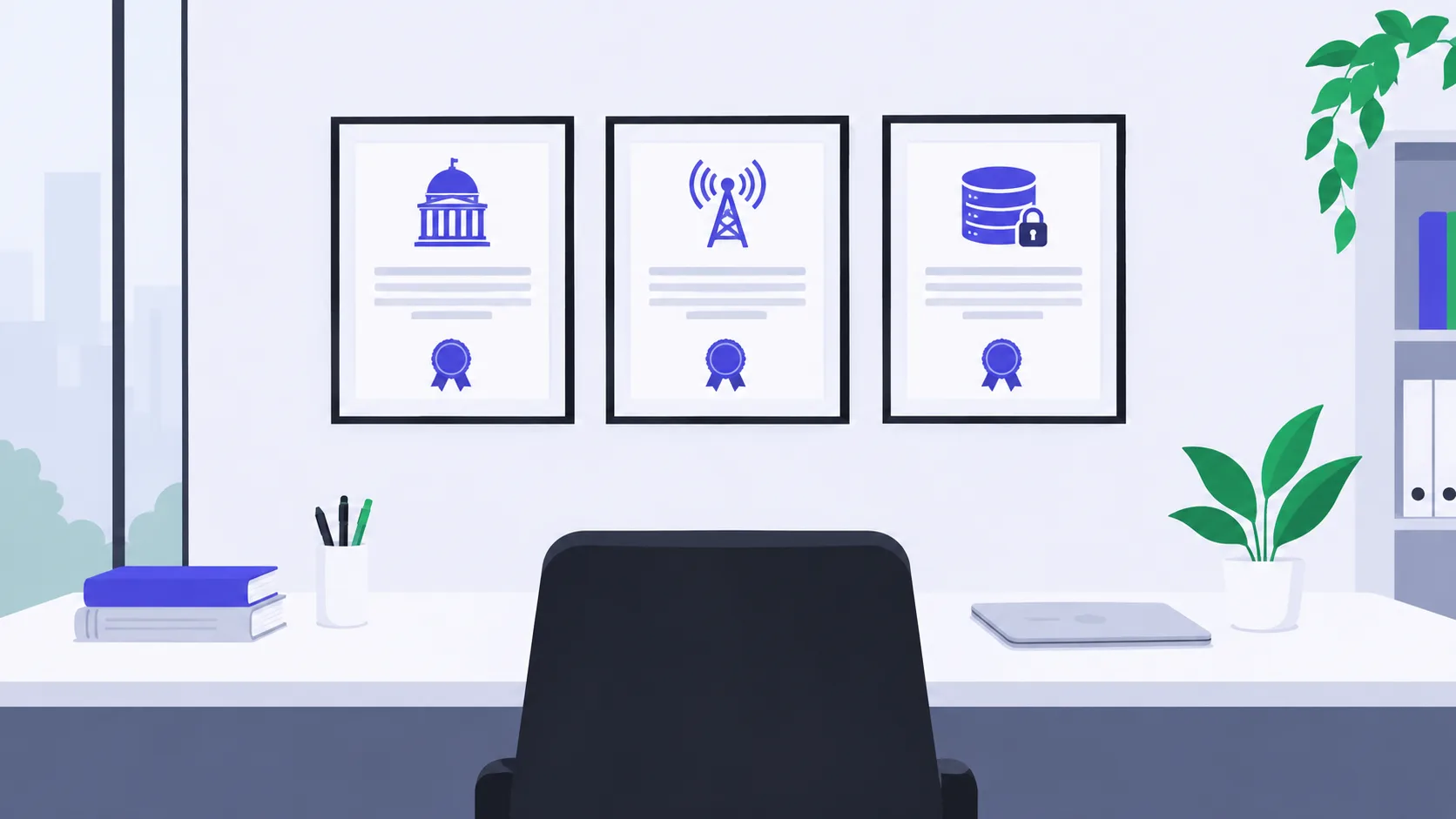
Regulatory Framework NBFCs Must Satisfy
NBFCs operating in India must align outbound collections with the RBI Fair Practice Code, the TRAI DNC registry, and any applicable data-localisation requirements before turning on an AI caller. That means permitted calling windows, mandatory disclosures, restrictions on harassment, and a documented consent basis for the contact. A prospective vendor conversation, whether over a scoped product demo or an RFP, should start with these constraints, not with feature demos.
How AI Enforces Call-Time and DNC Rules
A properly configured AI voice agent calls only within permitted hours, reads the mandatory disclosures on every attempt, and never deviates from the approved script. That is a consistency property manual teams struggle to hold at scale, especially near shift changes or month-end. Every call is recorded and timestamped, giving the compliance team a searchable audit trail when a borrower disputes an interaction or a regulator requests records. Vendors publishing their controls on a company page or in a security addendum should be evaluated against these needs directly.
Consent management must be handled upstream of the dialer. The system should cross-reference the DNC registry, verify digital consent records, and suppress numbers where consent has been withdrawn, before any call attempt is queued. Data residency, SOC 2 or equivalent certification, and call-record retention windows are procurement questions, not implementation details. Practical takeaway: treat the compliance layer as the first design decision, not the last integration.
Where AI Outperforms Human Agents and Where It Does Not

Strengths: Volume, Consistency, and Off-Hours Coverage
AI callers cover the entire delinquent portfolio simultaneously, including evenings and weekends when human desks are closed. That converts accounts that would otherwise age into the next delinquency bucket. Consistency is the second advantage: identical disclosures, identical tone, identical negotiation logic, borrower after borrower. According to Kompato, AI is used by 57% of operations for account prediction and segmentation and by 56% for self-service and virtual negotiation facilitation, which reflects where the technology is genuinely load-bearing today. For NBFCs benchmarking vendors, the pricing page is usually the fastest way to translate concurrency into a monthly cost.
Limitations: Promise Credibility and Complex Negotiation
The honest counterpoint comes from a Yale SOM study built on 22 million collection cases: AI callers collected 9% less repayment value in the first 30 days than human agents, and the gap persisted at 5% a year later. The researchers attribute part of the deficit to borrowers being more willing to break promises made to an AI than to a person. When humans took over from AI on day 6, they could not fully reverse the shortfall opened during the AI-only period, which suggests the early contact strategy has durable effects.
The practical read: AI performs best on early-bucket, low-balance EMI follow-up where volume is high and negotiation is bounded. Human agents remain more effective on high-balance, late-stage, or legally sensitive accounts. NBFCs treating this as a portfolio-segmentation problem rather than a full replacement question tend to see the published resources and vendor case notes line up with their own results.
Deploying AI Collections Calls in an NBFC: Practical Considerations
Integration With Loan Management Systems
The critical dependency is the loan management system. The AI agent needs real-time access to outstanding balance, EMI schedule, last payment date, and borrower contact history to hold an accurate conversation. A stale balance on the call is worse than no call, because it damages trust and creates a compliance exposure. Confirm that the integration surface supports your LMS, CRM, and payment gateway before signing.
Script Design and Escalation Rules
Script design should define negotiation guardrails explicitly: which settlement percentages the AI may offer, when it must escalate, which borrower statements trigger a live-agent transfer. Abusive language, mentions of legal action, hardship disclosures, and death-in-family statements are common escalation triggers. Keep the rule set version-controlled and reviewed by compliance. The agent configuration workspace is the practical home for these rules.
Measuring Performance After Go-Live
Raw call volume is the wrong headline metric. Track right-party contact rate, promise-to-pay per right-party contact, promise kept rate, and cost-per-rupee recovered. Floatbot's LEXI platform documents 90% automation of customer support contacts, a 60% increase in collections, and 80% call deflection as benchmark outcomes for mature deployments. Cresta reports an 11% improvement in promise-to-pay per right-party contact and a 26% increase in promise amount relative to balance for a Fortune 500 bank using AI-assisted collections. Use these as directional benchmarks, not targets, and calibrate against your own baseline within the first 60 days. Ongoing coverage of NBFC collections patterns sits on the DubCall blog if you want a running reference.
Conclusion
AI collections calls are a proven operational tool for NBFCs that need to scale EMI follow-up without proportionally scaling headcount, provided the compliance guardrails and human escalation paths are built in from day one. The technology works best as the first contact layer for early-bucket accounts, with human agents reserved for high-value, high-complexity, or late-stage cases. Selecting a vendor requires evaluating data residency, RBI and TRAI alignment, CRM integration depth, and audit-log quality alongside headline recovery metrics. Teams evaluating DubCall's approach should start with a compliance-first scoping conversation rather than a feature checklist.
FAQ: Frequently Asked Questions
Are AI collections calls legal for NBFCs in India?
Yes, provided calls follow the RBI Fair Practice Code, respect TRAI DNC registrations, run within permitted hours, and honour a documented consent basis. The AI must read the same disclosures a human agent would and log every call for audit.
Can an AI voice agent accept a payment directly on the call?
Yes. The agent can send a payment link over SMS mid-call, take a keypad card entry through a PCI-compliant gateway, or debit an authorised UPI mandate. The transaction is confirmed verbally and logged against the account before the call ends.
How does an AI collections system handle DNC-registered borrowers?
The dialer cross-references the TRAI DNC registry and internal suppression lists before every queue attempt. Numbers with active DNC status or withdrawn consent are removed from the outbound queue, and the suppression event is written to the audit log for compliance review.
What happens when a borrower refuses to engage or becomes abusive on an AI call?
The agent is configured with escalation triggers. Abusive language, mentions of legal action, or explicit hardship disclosures route the call to a human collector or drop into a warm-transfer queue. The transcript is preserved and flagged for supervisor review.
How is the AI collections call different from a pre-recorded robocall?
A robocall plays a fixed audio file regardless of what the borrower says. An AI collections call interprets freeform responses, negotiates within rules, captures a promise-to-pay, and adapts the next sentence to the borrower's answer, closer to a scripted human agent than to a recording.
What metrics should an NBFC track to evaluate AI collections performance?
Track right-party contact rate, promise-to-pay per right-party contact, promise kept rate, cost-per-rupee recovered, and dispute rate. Compare these to the human-agent baseline segmented by bucket age and balance band, not against raw call-volume numbers.
Can AI handle multilingual borrowers across regional languages?
Modern voice AI stacks support multiple Indian languages, typically Hindi, Tamil, Telugu, Kannada, Marathi, Bengali, and Gujarati alongside English. Language selection can be driven by borrower profile data or detected on the call, with the same compliance script rendered in each language.
Does early AI contact hurt long-term repayment rates?
The Yale SOM research suggests it can. AI-first contact collected 9% less in the first 30 days and 5% less a year later than human-first contact, and later human takeover did not fully close the gap. Segmenting AI use by risk band mitigates this.
- AI collections calls
- NBFC collections
- Promise-to-pay
- RBI Fair Practice Code
- Voice AI